


Rogue (Epic Quest Bio)

| Rogue | |
|---|---|
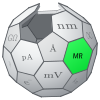
 The Rogue poster, one of nine class posters in the header of the company's member software | |
| First appearance | Class posters (June 2026) |
| Created by | Molecular Reality Corporation |
| In-universe information | |
| Occupation | Not defined |
| Affiliation | Molecular Streaming Corps |
| Color | None |
Rogue is one of the nine character classes of Epic Quest Bio, the role-playing game through which Molecular Reality Corporation organizes its work, and the only one with no predecessor. The other eight descend from the classes of the founder's essay of 2025 and the company's database. Rogue appeared in June 2026 as a poster in the header of the member software, with no definition, no color and no quests.[1] A Player Scientist may nonetheless take it as a major or a minor class.
Origins
The class is absent from every list of classes the company has published: the essay "How to Play Epic Quest Bio" of 2025,[2] the eight classes seeded in the database, the site copy of February 2026, the help file of the member software,[3] and a fourteen-class roster in a design draft of May 2025. No icon was drawn for it among the flat icons of the original eight.[1]
The one earlier trace is unpublished. A design draft for an introductory quiz campaign, kept in company files by March 2026, gives each of several classes its own quest. Its quest for "Rogue-Class Players (Unconventional thinking)", titled "The Unspoken Advantage", asks for an "unconventional or entirely overlooked" use of solid-state nanopores, under a mentor named Cipher, "a mysterious Rogue NPC who communicates in riddles".[1]
Poster
The poster, 3,746 pixels square, puts red letters outlined in yellow across a turquoise sky. Three pyramids stand on the horizon. In the foreground a lone traveler in green, carrying a sword, walks up a red canyon between two huge fleshy walls, and glowing pink, purple and red spheres, like cells, float on either side.[1] A member who clicks the poster opens the company's chat, LabChat, with "Rogue question:" already typed.
The word in company material
The founder's essay imagines new players asking "When do I roll for initiative against a rogue protein?"[2] Early Releases on Maxine's Quest (about 2022) describes the planned Labyrinth of the Dragon Tyrant as "Inspired by: 2.5d-rogue-like".[4] The roguelike genre takes its name from Rogue (1980), a dungeon game for Unix computers that generated a new dungeon for every game. It was written by students at the University of California, Santa Cruz,[5] the campus where David Deamer and his colleagues later spent decades on nanopore sequencing.[6] In The Disclosure Crawl, the room of the boss Maxine's Shadow announces "A rogue AI challenges your understanding!"[7] No quest names the class. The nearest offer on the company's list was "Guerilla Actions", worth 250 experience points and since switched off, for "(entirely safe and legal, but potentially crazy) actions to promote the cause".[1]
In tabletop games
The founder's essay names Dungeons & Dragons as the model for the classes. That game's thief arrived in its first supplement, Greyhawk (1975).[8] The second edition of 1989 put the thief and the bard together in a group called rogues,[9] and the third edition of 2000 renamed the thief itself the rogue.[10] The bard is the class that the company's help file lists for "storytelling/marketing".[3]
See also
References
- ^ a b c d e "Company records". Molecular Reality Corporation. October 2026.
- ^ a b Kemmishtree (2025). "How to Play Epic Quest Bio". epicquest.bio.
- ^ a b "EQBio-OS help: Gamification & Epic Quest Bio". Molecular Reality Corporation. 2026.
- ^ "Early Releases on Maxine's Quest". Molecular Reality Corporation. 2022.
- ^ Craddock, David L. (2015). Dungeon Hacks: How NetHack, Angband, and Other Roguelikes Changed the Course of Video Games. Press Start Press.
- ^ "Three decades of nanopore sequencing". Nature Biotechnology 34: 518-524. 2016. doi:10.1038/nbt.3423.
- ^ "Dungeons & Diligence: The Disclosure Crawl, Level 5: Arena of Maxine". Molecular Reality Corporation. April 2026.
- ^ Gygax, Gary; Kuntz, Rob (1975). Supplement I: Greyhawk. TSR.
- ^ Cook, David (1989). Advanced Dungeons & Dragons Player's Handbook. 2nd ed. TSR.
- ^ Cook, Monte; Tweet, Jonathan; Williams, Skip (2000). Dungeons & Dragons Player's Handbook. 3rd ed. Wizards of the Coast.